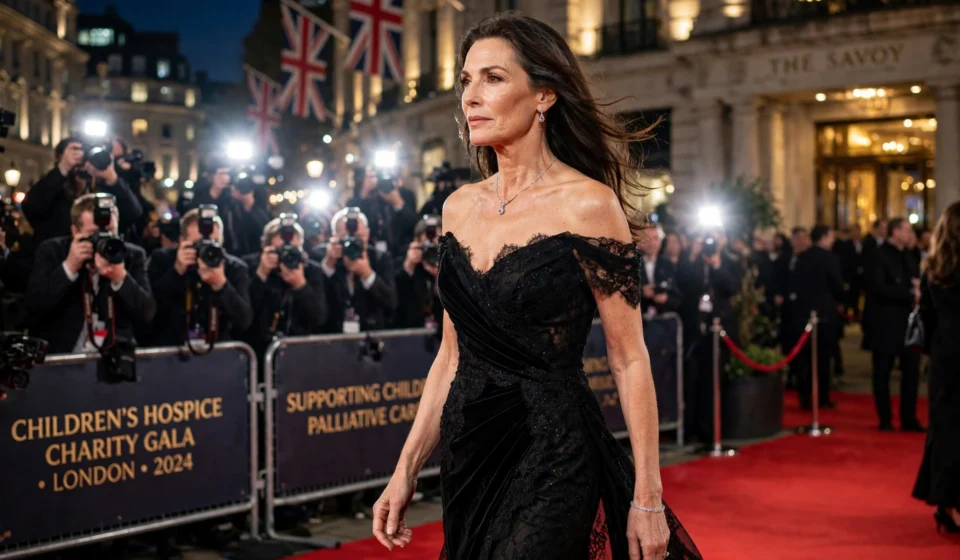
Naomi Campbell Just Won the Fight to Clear Her Name, and the Judge’s Verdict Says She Was “Deceived”

For two years, one of the most famous faces in fashion has carried a label she called deeply unfair. Naomi Campbell, the 56 year old British supermodel, was banned in 2024 from ever serving as a charity trustee in England and Wales after regulators found serious financial mismanagement at her charity, Fashion for Relief. Money meant for good causes had been spent on luxury hotel stays, spa treatments, room service and even cigarettes.
Now a tribunal has given her the answer she fought for. On Thursday, October 1, 2026, a three judge First Tier Tribunal overturned the five year ban, ruling that Campbell had been “deceived” by a fellow trustee who concealed the worst of the misconduct from her. It is a dramatic vindication, and the judges used some of the strongest language a court can offer: they found Campbell’s evidence, and her conduct while the charity operated, was “entirely honest.”
The ruling that changed everything
The case centers on Fashion for Relief, the anti poverty charity Campbell founded in 2005 with a simple mission: harness the fashion industry to relieve poverty and advance health and education. Over the years it raised money through glamorous fundraising events in Cannes and London, drawing celebrities, designers and billionaires to its galas. Fashion weeks have been central to her world for decades, just as they were for Olivia Colman when she stole Paris Fashion Week with her surprise runway debut.
But a Charity Commission inquiry, opened in 2021, uncovered what the watchdog called “multiple instances of misconduct and/or mismanagement.” Among the findings that made headlines in 2024: charity funds had been used to pay for Campbell’s stay at a five star hotel in Cannes, plus spa treatments, room service and cigarettes. Investigators found that only 8.5 percent of the charity’s total spending actually went to charitable grants. Based on that evidence, the Commission disqualified Campbell for five years, along with two other trustees: Bianka Hellmich, who was banned for nine years, and Veronica Chou, banned for four years.
Campbell appealed immediately, and her argument was always the same. She insisted she was the victim of a “concerted deception,” telling anyone who would listen that she had “never undertaken philanthropic work for personal gain.”
This week, the tribunal agreed. In its ruling, the three judge panel concluded: “There was serious misconduct and mismanagement in the administration of the charity she founded, Fashion for Relief. The tribunal has found, however, that its most serious features, including unauthorised payments to Ms Campbell’s co-trustee, Ms Hellmich, failures in the management of the charity’s finances and the misuse of its funds, resulted from Ms Hellmich’s conduct and were concealed from Ms Campbell.”
The judges added that Hellmich “used forged documents and a false email address purporting to belong to” Campbell, and “also deceived professional advisers and the Commission.” Their conclusion was unambiguous: “Ms Campbell was not involved in, and did not know of, that conduct.” You can read the full Associated Press report on the tribunal ruling for every detail.
The woman at the center of the deception
Bianka Hellmich, a lawyer and fellow trustee, emerges from the tribunal’s findings as the central figure in the scandal. During a four day hearing in June 2026, Campbell’s legal team told the court that Hellmich had forged Campbell’s signature, impersonated her using a fake email address, and lied about her own credentials as a charity lawyer.
The inquiry had found that Hellmich received more than 290,000 pounds in unauthorised consultancy payments from the charity. At the tribunal hearing, it was said that she may have been paid more than 500,000 pounds from charity funds in total. Hellmich, who was banned from serving as a trustee for nine years, denies the allegations against her.

The deception ran deep. The tribunal was told Campbell had no idea that hotel charges of 4,386 euros from a 2018 trip to the south of France, covering room service, spa treatments and cigarettes, had been billed to the charity. To the outside world, it looked like a supermodel living lavishly on donor money. Behind the scenes, the tribunal found, she was being kept in the dark by the one person she trusted most to run the books.
“My only mistake was trusting her”
Campbell did not hold back when she gave evidence at the central London hearing. She told the tribunal that her “only mistake” was trusting Hellmich, describing her as someone she knew and respected as a lawyer. “I don’t look at it as a failure, I look at it as me trusting someone that I knew, someone that was a lawyer,” she said, arguing that both she and the Charity Commission itself had been deceived.
The tribunal clearly believed her. The judges rejected criticisms from the Commission’s lawyers, who had suggested Campbell was focused on “controlling the media narrative.” They said: “In our assessment none of Ms Campbell’s answers were capable of being taken as doing any such thing,” adding that her evidence had been “entirely honest.”
The judges did not give her a completely clean bill of health. They noted that Campbell “did share ultimate responsibility for the charity’s failure to keep proper minutes and file its accounts on time.” But they ruled that this did not make her unfit to serve as a trustee, particularly “including the sustained deception” she had faced. It is a reminder of how quickly a public figure’s reputation can be put on trial, a pressure Michael Flatley faced under very different circumstances this week after the death of his wife Niamh.
Speaking after the ruling, an emotional Campbell said she was grateful to the judges “for taking the time to hear my side, look at the evidence, and see the truth of what happened.” She added: “Giving back has been part of who I am, so having that questioned hurt deeply. Now I can get back to what matters most to me: being there for the people and communities I’ve always wanted to serve.” A detailed breakdown of the case timeline is available here.
The Charity Commission responded with a measured statement, saying its disqualification order had been made on “the evidence available to us at the time” and that the ruling recognised both the Commission and Campbell had been “subject to sophisticated deception.” The Commission also noted its intervention had ensured 250,000 pounds raised for causes including Save the Children and The Mayor’s Fund for London was passed on to those organisations.
What happens now
The decision makes Campbell only the second person to have a Charity Commission trustee disqualification overturned by a court. Fashion for Relief itself was dissolved and removed from the register of charities in 2024, so there is no charity to return to. But for Campbell, the ruling restores something arguably more valuable: her name.

The supermodel, who has spent four decades as one of fashion’s most recognisable figures, has long insisted philanthropy is central to who she is. Her statement after the verdict carried the tone of someone finally able to move on: “Thank you to my higher power,” she said.
The next chapter may see her return to charitable work in a new form. For now, though, the message from the tribunal is clear. When it came to the worst of what happened at Fashion for Relief, Naomi Campbell was not the villain of the story. She was, in the judges’ own word, deceived.
Stories of celebrities fighting for their reputations and their families continue to make headlines, from John Boyega’s secret marriage revelation to the court battles shaking Hollywood. CineVibe will keep following every twist.